Bwindi Impenetrable National Park Animals
Bwindi Impenetrable National Park Animals: Bwindi Impenetrable National Park is a hallmark Ugandan safari destination, located in the southwestern region of Uganda, with thick vegetation cover where gorilla trekking adventures take place with park ranger guides who accompany you in this forest.
This forest is truly an African jungle with droplets of the sun coming through the thick forest cover while giving you a warm feeling of being in paradise with zero pollution right from various emissions common to our daily environment.
However, Bwindi Impenetrable National Park was declared a UNESCO World Heritage site in 1994 because of its diversity in harboring different flora and fauna as well as being a home to the remaining half of the world’s endangered mountain gorillas. The park sits on an area covering about 321 square kilometers, of which the big part of the land is forested or covered by bamboo and shrubs. The forest is located in a steep, slippery valley with ridges and hilltops.
Weather and climate—Bwindi
Bwindi has a cool tropical climate because of the immerse canopy and you are advised to carry some warm clothing for evenings and long-sleeved shirts and trousers for trekking.
For the ultimate experience for anyone wishing to do gorilla trekking or birding, you need to be physically fit to ascend and descend the terrain. More so, the park lies at an altitude between 1160 and 2607 meters above sea level.
Animals in Bwindi Impenetrable national park
Bwindi Impenetrable National Park is a home of about 120 mammal species that are rarely seen in this hide of the dense forest. They include the large mammals and small animals. Animals to see in Bwindi include elephants, duikers, golden cats, buffaloes, bush pigs, giant forest hogs, yellow-backed duikers, black-fronted duikers, clawless otters, side-striped jackals, civets, bats and rodents, among others.
Since the park is one of the main stopping destinations for gorilla trekking, it marks the most adventurous primates on the planet earth. More than that, Bwindi is a home to 11 primate species, which are L’hoest’s monkeys, De Braza monkeys, red-tailed monkeys, black and white colobus monkeys, Demidoff’s galago, spectacled galago, chimpanzees, Baboons and the great Bwindi mountain gorillas.
Despite Bwindi being a location for gorilla trekking; It has over 21 habituated gorilla families splintered in four gorilla trekking sectors: Buhoma, Ruhija, Rushaga and Nkuringo. Having different trailheads where gorillas can be searched for
Birds
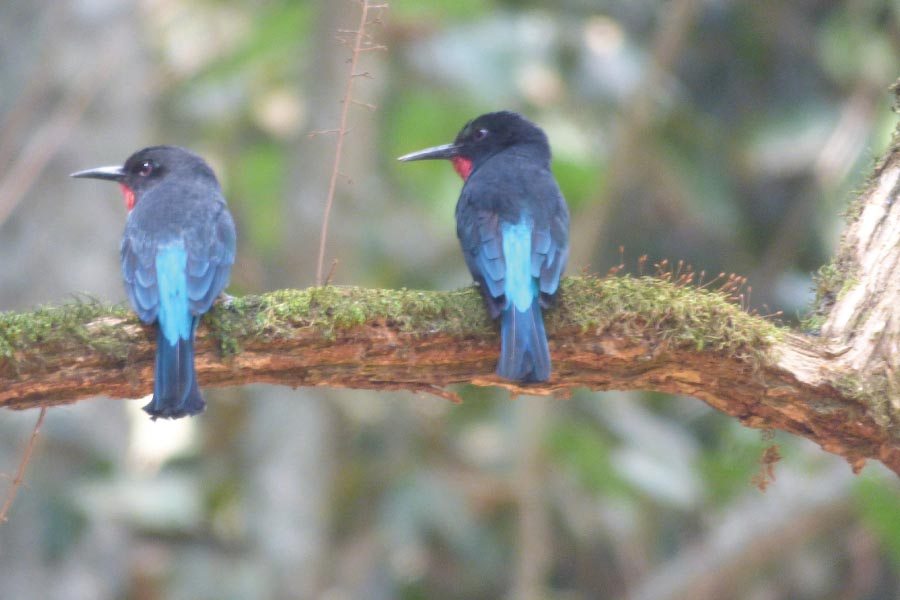
Bwindi Impenetrable Forest National Park is also a paradise for birders with over 350 species of birds. Making the park one of the best places to do birding in Uganda owing to its rare and notable bird species, a home to 23 Albertine Rift endemics, 14 are recorded not elsewhere in Uganda. It also boosts globally threatened species, including Shelley’s crimson wing, Grauer’s broadbill, and Chapin’s flycatcher; and other species, including Fraser’s eagle, western bronze-napped pigeon, purple-breasted, blue-headed mountain-masked, and collared apalis; white-bellied robin chat; handsome francolin; and regal sunbirds, among others. Birding in Bwindi is best done in the Mubwindi Swamp in the Ruhija sector of the park, where you can view various species of birds, on a serious note.
Butterflies and Amphibians
Bwindi is also a home to over 200 butterfly species, including the endemic species. Which include the African giant swallowtail and the cream-banded swallowtail. Then the amphibian’s species are identified as over 27, endemic to the Albertine Rift. Of which fourteen in number are snake species and fourteen are lizard species.
Other facts—Activities to do in Bwindi Impenetrable National Park:
For first-time travelers who wish to visit Bwindi Impenetrable National Park, they think of mountain gorilla trekking—tracking, though it’s the main tourist attraction and most-done activity. Not knowing that Bwindi Impenetrable Forest is a heavily dense rainforest, a home of many species such as notable birds and animals and other activities where one can engage after gorilla trekking or gorilla habituation experience. Activities like nature walks, birding, and cultural encounters with Batwa pygmies, among others, thus, are for Bwindi Impenetrable National Park animals.
Gorilla Tracking in Bwindi Impenetrable Forest
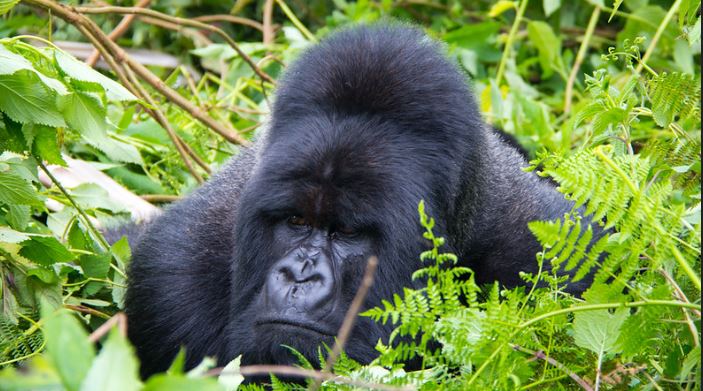
Bwindi is a home to half of the world’s remaining endangered mountain gorillas. Gorilla trekking is a daily done route, meaning visitors must book their gorilla permits in advance before their arrival time and no one can go for gorilla trekking without permits. Gorilla trekking permits cost USD800 per day per trek for foreign nonresidents, USD700 for foreign residents, and UGX300,000 for East African citizens.
Gorilla tracking starts early in the morning with a short briefing about the rules and regulation of gorillas in the forest. Then head out to the trekking trails with a guide in the group of 8 persons and the activity can last 30 to 8 hours depending on the movement of the gorilla group you’re assigned to.
Remember to pack enough drinking mineral water and rain jackets and put on rubber hiking shoes with your packed lunch boxes because you never know what activity might take place.
Once the gorilla group is allocated, one hour is given to you to observe these rare primates in their natural habitats and take memorable photography as well as record the video for future remembrance. After you return to the lodge.
Birding
Bwindi Impenetrable Forest is also one of Uganda’s birding sites, a home of about 350 species of birds, including 23 Albertine rift endemics and 14 that are not recorded anywhere. On your birding day, you will be guided by a knowledgeable guide who will take you through different spotting areas or trails in the forest and be able to spot various notable species.
Nature walk
In Bwindi there are many stunning trails to carry out nature walks, like the Buhoma-Nkuringo trail, which lasts 4-5 hours crossing through the park. Munyanga waterfall walk and Ivi River walk, which takes about 7 hours. Muzabajirro Loop—a 6-kilometer walk around the hill areas, with nice places to view primates and birds.
Cultural Experience
On a visit to Bwindi National Park, you can have Buhoma community tours and get interested in the storytelling and dance of the Batwa and visit a handcraft shop, among others.
Accessibility – Bwindi Impenetrable national park
One can access Bwindi Impenetrable National Park either by scheduled or charter flight from Entebbe International Airport to Kihihi Airstrip or connect to Kisoro Airstrip. Or you can book your domestic flight from Kajjansi Airfield, which lies between Kampala and Entebbe.
Driving distance: From Kampala to access Bwindi by car is approximately a 9- to 10-hour drive; it is recommended to use a 4×4 wheel drive.
Lodges and Camps to stay in while on visit to Bwindi Impenetrable National Park range between luxury and budget; accommodation fees depend on visitor’s wallet.
The park has four gorilla trekking regions where trekking can be done whereby clients are advised to book their safari accommodation in the same region they are assigned in a gorilla group to trek in on that particular day and such regions include Buhoma, Ruhija, Nkuringo and the Rushanga gorilla sector.
Lodges in Nkuringo include Clouds Mountain Gorilla Lodge, Nkuringo Safari Lodge, among others.
Lodges in Ruhija include Bakinga Lodge, Broadbill Camp, Agandi Lodge, and many more.
Lodges in the Rushaga area include Chameleon Hill, Gorilla Valley Lodge, Rushaga Gorilla Camp, Chameleon Hill, Bwindi Jungle Lodge, Ichumbi Gorilla Lodge and other lodges.
Lodges in the Buhoma area include Buhoma Community Rest Camp, Buhoma Lodge, Mahogany Springs, Sanctuary Gorilla Lodge, Silverback Lodge, Buhoma Haven Lodge, among others.